


Unleashing the Electrophilicity of N2-Derived Rhenium(V) Nitrides
Chunxiao Shan, Liang Liu, Shu-Xiao Ji, Shaozhi Du, Junnian Wei* and Zhenfeng Xi*
CCS Chem. 2026, DOI: 10.31635/ccschem.026.202608252
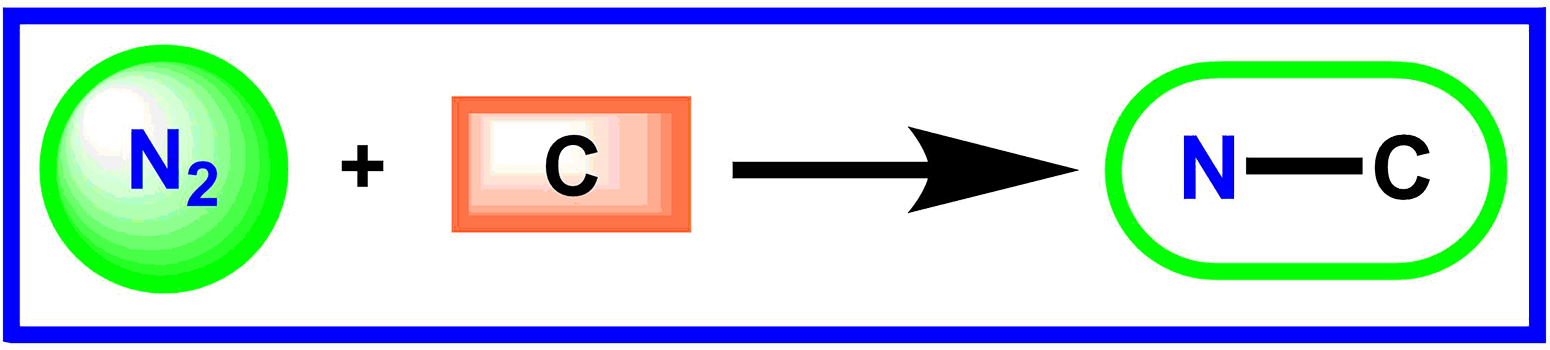
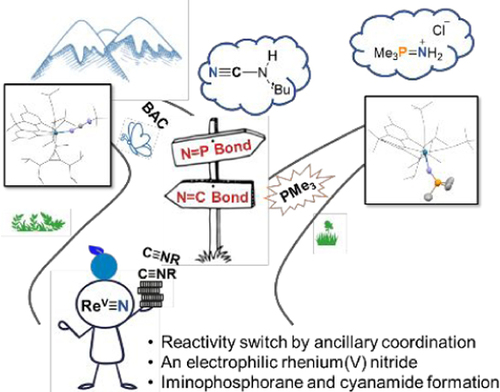
The conversion of dinitrogen into organic nitrogen compounds remains a central challenge in molecular dinitrogen fixation. Metal nitrides generated from N2 cleavage are attractive intermediates, but their high stability often limits further functionalization. Herein, we show that cationic rhenium nitrides [(acriPNP)Re(N)(CNR)2][BArF4] (R = tBu, Ad) exhibit electrophilic reactivity toward N=X bond formation. Modulated by auxiliary axial ligands, the nitrido group reacts with PMe3 to form phosphoraniminato complexes and with isocyanides in the presence of bis(diisopropylamino)cyclopropenylidene to yield carbodiimido complexes. Upon subsequent acidolysis, these species liberate iminophosphorane and cyanamide, achieving the full N-atom transfer from N2 into organic products. Control experiments and DFT studies indicate that the auxiliary isocyanide ligands and the trans arrangement of the pincer donor enhance the electrophilic character of the Re≡N unit. Our results demonstrate a ligand-gated strategy to enrich the reactivity of nitrides by the addition of trans donors without changing the metal oxidation state, and to expand their use as nitrogen-atom synthons for the formation of organic N-P and N-C products.