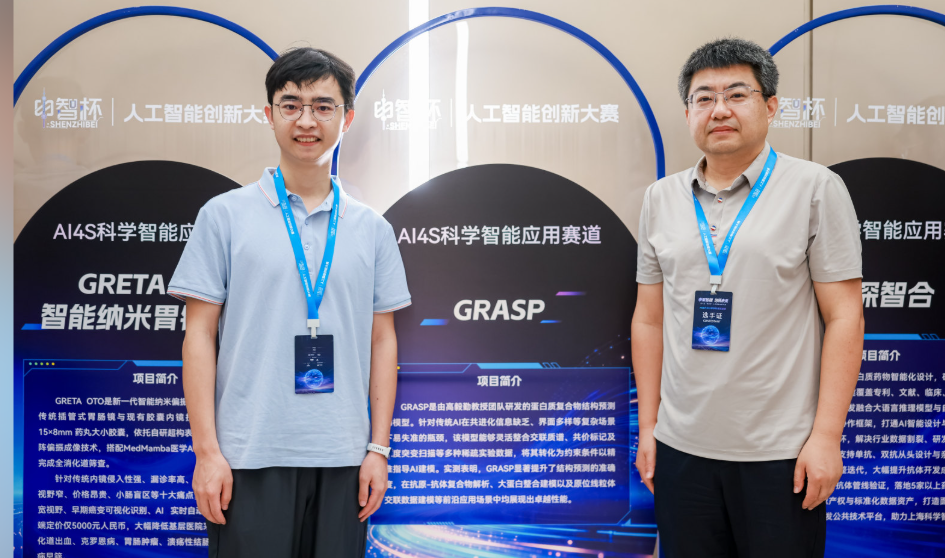
A team from Peking University's College of Chemistry and Molecular Engineering has taken second place in the "AI for Science" track of the inaugural "Shenzhi Cup" innovation competition, held at this year's World Artificial Intelligence Conference (WAIC) — China's largest annual gathering devoted to AI.
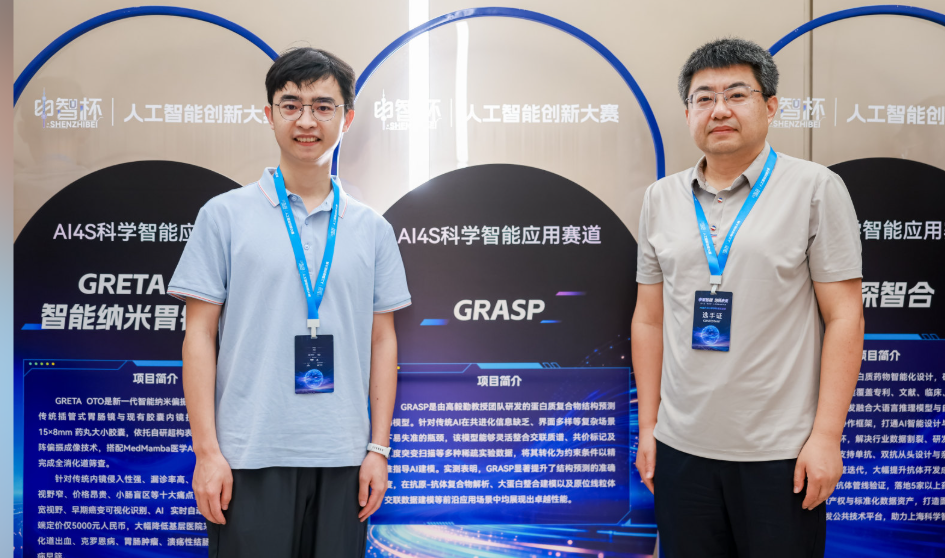
The contest, staged under WAIC's umbrella and co-organized by Shanghai State-owned Capital Investment Co., Ltd. and the China Academy of Information and Communications Technology (CAICT), a government research institute, attracted 1,451 teams from more than 30 countries and regions. The winning entry, developed in the lab of Professor Gao Yi Q
in, is an AI system that predicts the structure of protein complexes.
Why protein structures matter
Proteins are the molecular machines that keep living things running. A protein's function is largely determined by the three-dimensional structure it folds into, and that structure is central to medicine: most drugs work by binding to a specific protein, and whether they fit depends on the protein's structure.
For decades, determining a protein's structure required years of painstaking lab work. That changed in 2020, when Google DeepMind released AlphaFold, an AI system that predicts protein structures with startling accuracy — work that helped earn DeepMind's Demis Hassabis and John Jumper the 2024 Nobel Prize in Chemistry.
What GRASP does differently
Powerful as AlphaFold is, it is less reliable on protein complexes — groups of proteins that bind together to do their jobs — and especially on pairs like antibodies and antigens, where the evolutionary clues AlphaFold relies on (shared ancestry patterns across related proteins) are largely absent.
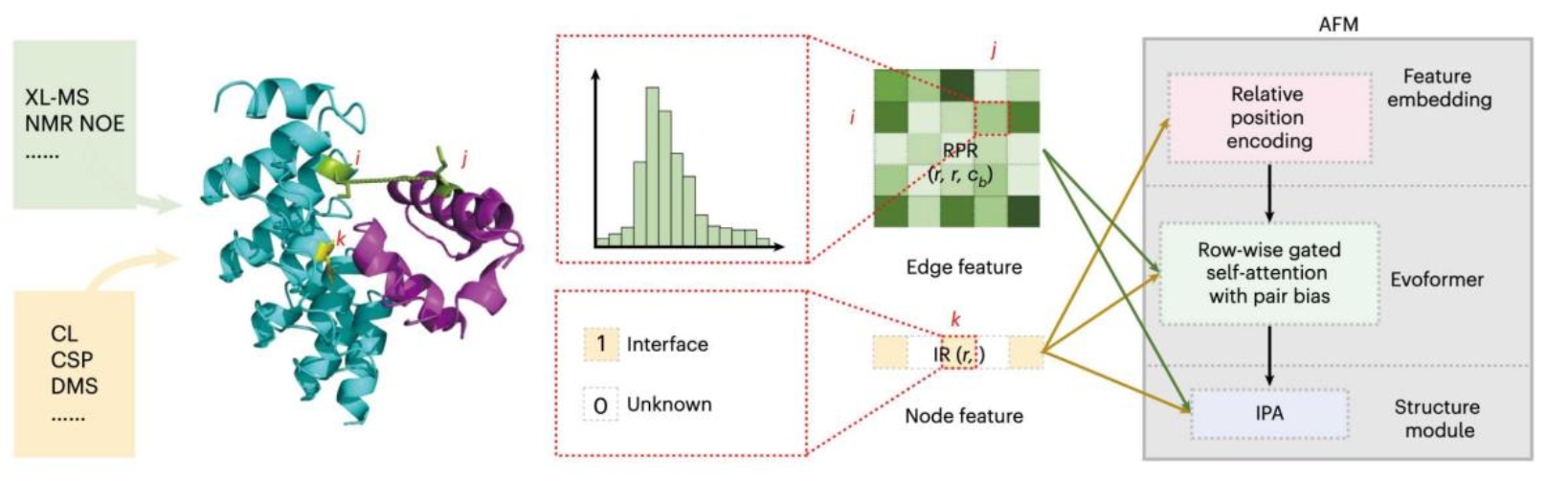
GRASP (Generalized Restraints Assisted Structure Predictor) closes that gap by combining AI prediction with real experimental data. The approach efficiently consolidates multi‑source constraints from experiments such as cross linking mass spectrometry (XL‑MS), nuclear magnetic resonance (NMR), and deep mutational scanning (DMS), improving the prediction accuracy for protein complex structures.
The payoff, the researchers report in Nature Methods: when predicting antibody–antigen structures, GRASP outperformed both AlphaFold-Multimer and the newer AlphaFold3, currently the field's gold standards.
In addition, GRASP is capable of merging multi‑dimensional experimental data to achieve fast integrative modeling of protein complexes. It facilitates high‑throughput reconstruction of in‑situ dynamic complex structures on a subcellular scale, substantially broadening the application scope of protein‑structure prediction.
Built on Chinese-made technology
One notable detail draws the eye of observers tracking China’s technology landscape: GRASP operates wholly on domestic AI infrastructure, namely Huawei’s MindSpore software framework and Ascend chips. As such, it delivers a “secure, controllable, efficient” home‑grown alternative capable of underpinning Chinese biomedical researchers’ work spanning fundamental biology to novel drug development.